
As I gear up for a well-deserved break — and return to the origin of my coffee inspiration — I leave you with a couple inspirational coffee-themed independent TED talks.
Category Archives: Ecotourism
Ecotourism: Discovering Kau Coffee
Aloha — In anticipation of a series of posts relating to Hawaii’s specialty coffee market, culture and people, Cafe Hound will post a few articles from third-party sources highlighting the people we hope to meet during our visit.
The first article is graciously borrowed from Lavonne Leong of HonoluluMagazine.com: http://www.honolulumagazine.com/Honolulu-Magazine/July-2010/Farm-to-Table-Coffee/index.php?cparticle=1&siarticle=0#artanc
 PHOTO: OLIVIER KONING |
Americans are on intimate terms with coffee. We consume about 400 million cups of the stuff every day. We wake up with it; work with it; date with it; pull all-nighters with it. By now, you’d think we’d know something about our favorite little brown bean.
Yet, in an age of increased interest in eating local and knowing your farmer, the back-story of coffee remains relatively unknown, in part because of a supply chain that can read like a Lonely Planet guide. It’s not uncommon for coffee to be grown and harvested in one country, undergo multistep processing in another and be consumed in a third.
Except here. Hawaii is one of the few places on Earth that both produces this strictly tropical crop and enthusiastically consumes it. The global field-to-cup timeline of coffee can be up to a year; in Hawaii, it’s possible to go from harvest to table in a few days. Vertical integration is also becoming more common in Hawaii—where a single farm, or a farm and a nearby roaster, take the coffee all the way from harvest to roasted bean rather than specializing in only one step in the process.
|

Vertical integration: an easy catchphrase to drop, harder to accomplish well. A true field-to-cup coffee producer needs to master a mind-boggling array of skills: farming, processing, roasting, marketing and distribution.
Enter Shawn Steiman, scientist, consultant and self-described “coffee geek.” To Steiman, and others like him who are helping to usher in a new age of Hawaiian coffee, the creation of a good coffee is an achievable art—and a science that can be taught. Steiman has translated a love of coffee that began in elementary school into a coffee-centric horticultural dissertation and a career mentoring coffee farmers and producers across the globe. He also educates the public palate here in Hawaii through coffee “cuppings”—a centuries-old practice that is equivalent to wine tasting.
Steiman feels that the time is right for producers of artisanally made coffee—also known as specialty coffee—to find a wider audience. America, he says, is riding the “third wave” of coffee consumption (the first is coffee as a diner commodity, the second a Starbucks-type lifestyle choice, and the third, a deep appreciation of coffee’s origins, craft and subtlety).
For some, it’s an obsession: coffee’s third wave has spawned an intense culture of cupping and barista competitions, avidly read reviews of specialty coffees, “trip to origin” tours and a descriptive coffee-tasting vocabulary that approaches wine’s: an interesting coffee might offer aromatic notes of fruits and flowers, chocolate, caramel, herbs and even fir tree. “Coffee geeks are attached,” says Steiman. “They’re passionate. These people have espresso machines they can, and will, tweak to a 10th of a degree.”
You don’t have to be a coffee geek to appreciate that coffee folks in Hawaii are upping their game—and all of us who like something good in our cup will benefit.
|

Small Producers, Big Flavor
The birth of a new coffee sensibility.
 PHOTO: COURTESY JOAN OBRA, RALPH GASTON |
Something is happening in the world of Hawaii coffee. For years, big growers dominated the scene, and Hawaiian coffees, particularly the sought-after Konas, were routinely blended with inferior product to make them more affordable—a practice that diluted not only the coffee but, eventually, its reputation. Now, with sustainability and fair-labor practices at the forefront of farming, tastes evolving to appreciate coffee excellence and thousands of acres of prime farmland released by the sugar industry, smaller coffee farmers, boutique roasters and purer coffee are getting more play. In two decades, Hawaii has expanded from one coffee region to 11, and the coffee world at large has taken note. In 2008, Hula Daddy’s “Kona Sweet” coffee received a score of 97, the highest Coffee Review ranking in the world that year and the publication’s third-highest rating in history. A Hawaii-based barista, Pete Licata, of Honolulu Coffee Co., won this year’s highly competitive Western Regional Barista Competition with a blend of Kona and Maui coffees.
The birth of the Kau coffee region, which was planted in the 1990s and 2000s, is a prime example of this new dynamic. Less than 15 years ago, Kau was dominated by its sugar mill. Today, dozens of small farms, many of which belong to the Kau Coffee Growers Co-Operative, are making a name for the region by producing exemplary coffee. Some, like the co-op’s president, Lorie Obra (of Rusty’s Hawaiian coffee), have gone for complete vertical integration. Obra supervises the entire process from field to cup, experimenting with unusual methods such as saltwater fermentation. Her coffees have garnered reviews from the industry’s standard publication, Coffee Review, which used words like “mindblowing.”
Since they burst onto the competition scene a few years ago, Kau coffees have consistently garnered top prizes; this year, Kau’s Rising Sun Farms was named Coffee of the Year by the Specialty Coffee Association of America in the Hawaii-USA category. Alan Wong, who serves four Kau coffees in his flagship restaurant, says, “What makes Kau coffees so delicious is their terroir—you can ‘taste the land.’ They have a special combination of rich volcanic soil, rainfall, sunlight and humidity.”
Biography of a Bean
Farm Beginning
Hawai‘i is the only state in the U.S. that grows coffee, a crop with very specific temperature requirements and a love of volcanic soil. Although Kona-grown coffee has been produced for more than a century, the perfect planting opportunity occurred in the 1980s and 1990s when the withdrawal of sugar freed up some of Hawaii’s most fertile planting grounds.
Putting Down Roots
Putting down roots Left to its own devices, the coffee plant will grow into a small tree, about 30 feet high and covered in fragrant, white blossoms. Most growers prune their coffee plants for easier harvest; farmed coffee rarely reaches more than about 10 feet high. Although coffee evolved to love shady places, it produces more fruit in direct sun—as long as it’s given more fertilizer and water, too.
|

Getting Picked
Three years after planting, coffee trees begin to produce a round, red, juicy fruit known in the industry as a cherry. (The skin and pulp don’t taste like much, but the interior mucilage is sweet and packs a caffeine punch.) Because coffee cherries don’t mature all at once, and the fruit needs to be ripe to produce good coffee, growers often harvest by hand. At higher elevations, the coffee harvest can last for nine months a year—ideal for smaller growers who can keep a small staff or harvest the fruit themselves.
The Layers Come Off
A coffee bean is simply the seed of the coffee cherry. The fruit must be separated from its seed, and the seed from its thin outer layers of parchment and silverskin. There are a host of ways to do this, each of which affect the coffee’s final taste. Big growers tend to favor mechanical processing, while many smaller growers process by hand. A current trend is “natural-” or “raisin-” -processed coffee, which is left to dry inside the cherry and can produce fruitier coffees. Most coffee cherries are pulped, briefly fermented to separate the bean from its mucilage, then the bean is air-dried to the parchment stage. Green coffee beans, the end product of processing, can last for several months without losing quality.
The Heat is On
The heat is on “Green coffee is to roasted coffee as a raw grain is to baked bread,” says Hula Daddy roastmaster and coffee consultant R. Miguel Meza. The roast—the application of heat for between 10 and 20 minutes—is where a hard, uninteresting green bean can become a thing of aromatic beauty. Sugars caramelize, acids restructure and aromatics develop, to the tune of about 1,500 different chemical compounds. This makes coffee “probably the most complex food we consume,” says Shawn Steiman. “There are over a thousand things in the aroma alone.” Once the coffee is roasted, it’s at its peak of flavor and the freshness clock starts ticking. A coffee geek will notice the difference in about two weeks; a layperson, in four to six.
Grind and Brew
The finishing touches to the art of coffee lie with you, the drinker. All coffee beans must be ground before use, releasing aroma and flavor; grinding your coffee at home, on the day it will be brewed, means that all the flavor ends up in your cup instead of your storage cupboard. Given the choice between blade grinders and burr grinders, choose the burr, which produce a more uni-form particle size and a
smoother brew.
|

 |
Coffea
All coffee plants come from the genus Coffea, which—although it contains 103 species—produces two drinkable bean types: Coffea canephora, commonly called “robusta” and used in commodity coffees, and Coffea arabica, which produces the complex, lyrically flavored bean used in artisanal and specialty coffees worldwide. Hawaii grows only arabica coffee.
Kona Coffee
For the most part, Hawaii coffee is grown on former sugarcane lands that were freed up in the 1980s and 1990s—but not Kona. Kona’s sloped terrain meant that sugarcane was never an option; the region has been producing coffee continuously since the 1870s.
Three places to score a Hawaii coffee experience
Try the freshest coffee in the United States. Here’s how.
CHAIN: Honolulu Coffee Co.
The Honolulu Coffee Co., which has a new owner, roasts its Hawaiian coffee in small batches. You can buy the beans, or let the company’s award-winning baristas show you how it’s done in one of seven coffeehouse locations that serve 100-percent Kona and 100-percent Maui coffees, alongside house blends.
 PHOTO: OLIVIER KONING |
RETAILER: Whole Foods
At its Kahala store, Whole Foods carries coffees from all five coffee-producing Hawaiian Islands: Maui, Molokai, Oahu, Kauai and the Big Island. A particular specialty is peaberry coffee, which is sometimes said to roast more evenly and produce a smoother-drinking cup.
RESTAURANT: Alan Wong’s
Alan Wong’s makes a special effort to not just cook local but to drink local. The menu features no fewer than 13 Hawaiian coffees, eight of which are from the Big Island.
Going to the Dark Side
What a difference a roast makes.
Most coffee is roasted dark. There are some great darks out there, but this approach doesn’t always match the bean. There is a growing appreciation for light or medium roasts, which can showcase coffee made with care.
Light Roast: “Acidity and subtle aromatics will be at their peak” in a light roast, says Hula Daddy roastmaster R. Miguel Meza. This can produce some truly memorable coffees, but he cautions that, in order for a light roast to work, “the coffee must be exemplary.”
Medium Roast: Medium roasts strike a balance between nuance and body, sacrificing a little complexity for increased sweetness and mouth feel as sugars caramelize.
Dark Roast: Think Starbucks—and there’s nothing wrong with that. Roasting dark averages out differences in taste, conceals minor defects and introduces familiar smoky notes. Dark roasts also hold their own against added sugar and cream.
Quarantine
In agricultural terms, Hawaii is probably the best place in the world to be a coffee farmer, says Shawn Steiman. In 1888, King David Kalakaua enacted the first quarantine in Hawaii, to control imported coffee plants; as a result, Hawaii is free of the worst pests and diseases that plague other coffee crops worldwide.
Finca Review: Alto del Naranjo – Manizales, Colombia
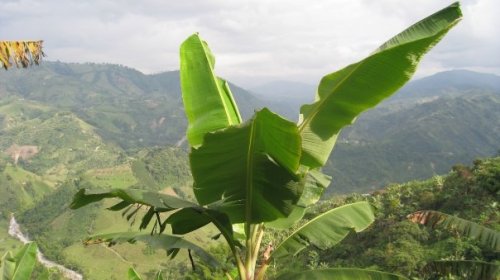
And so was — the Alto de Naranjo coffee farm located just outside of Manizales, Colombia in the Caldas Department of the coffee growing region also known in Spanish as the “Eje Cafetero”. I was wrapping up my 3-month stay in Nicaragua and arranged for a 10-day stop in Colombia before heading back to study in San Diego.
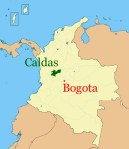
The trip to Colombia involved many mini-trips including taking a flight on Avianca from Bogota to Manizales where a friend picked me up and – the next day – took me to a farm southwest of Manizales in the municipal division of Alto del Naranjo bordering the Rio Rioclaro.
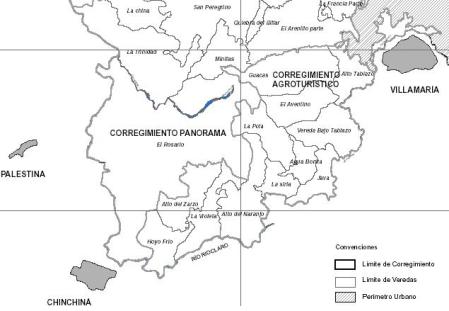
Specific Location of Alto del Naranjo
The trip to Horacio Montoya’s wonderful farm was an impulsive decision made the morning after a night out enjoying vallenato and Caldas’ very own Cristal licor.

The REAL Juan Valdez
The drive up to this series of farms that sit high upon the Colombian mountainside is always an adventure made more pleasant by stopping for some fresh cooked chicharrones, patacones (fried green plantains that are squashed and fried – best served with a bit of salt and perhaps salsa on them), beans, rice, and flank steak. Add a maracuya en agua (passion fruit diluted in water) and save your thirst for some freshly roasted/ground/brewed coffee on the actual farm.

Homemade Roasting Device for Stove
Upon my arrival to the farm I realized that I wasn’t the only foreigner ‘aprovechando’ (taking advantage of) the owner Don Horacio Montoya’s charming hospitality and effervescent personality. There was a delegation of about 15 Japanese tourists there from the Japanese Chamber of Commerce who were exploring the coffee plants, riding his horses, and enjoying the fruit of his labor – fresh coffee. Rather than interfere with their visit, my colleague and I interviewed him shortly and then explored the fields ourselves.
It quickly became clear to me that Horacio Montoya is no stranger to … strangers. He has foreigners, especially from Japan, visiting his farm all the time. His son Diego is about 17 and a Facebook addict like the rest of the world. Montoya has been able to take profits and reinvest them in providing his wife with more sophisticated roasting machinery, improving the prospects of hosting families on his property (eco-tourism), installing high-speed internet for watching the Grade C coffee market prices and for self-marketing his product on top of what the National Federation of Coffee Growers of Colombia does.
Although the quality of the coffee that is roasted and packaged on the farm is nothing to write home about, it is a novelty rarely seen in the coffee industry. The farmer realizes that the maximum value added chain of the process flow is roasting and retail and so he attempts to capture that profit for himself by ‘vertically integrating’ in a way. Considering he sells each package for 7.000 Colombian pesos, at the August 1, 2009 exchange rate this would equal roughly $3.42/pound.
He surely sells a better final product by selling it straight in green bean form in the traditional 70kg sacks that Colombian lights are so well known for. Visiting this region of Colombia is simply a necessity. It’s safe, it’s beautiful, it’s continuously developing at a rate much faster than more frequented Central American locations and the Colombian hospitality will forever leave an impression. Not to mention, this smooth and acidic coffee shares certain flavor properties with its neighbors but, there are some undiscovered gems in this region of Colombia. So long as the weather keeps up, I expect some of the single-origins of Colombia to possibly migrate to this region as they have in Popayan, Cauca & parts of Nariño, Huila, etc…
Stay tuned because Santa Marta in the north has some interesting beans coming out of it that will require another on site visit and their own write up in the coming months. Until then, I’ll leave you with a few pictures and details about the enchanting Alto del Naranjo farm in Manizales, Colombia.
Altitude: ~1,700 meters
Varietals: Caturra, Typica
Land: 4.8 hectares
# of plants: 25,000
Annual Production: Unknown
Harvest 1: Sept-November
Harvest 2 (mitaca): Late Jan-March
Proportion domestically sold: n/a
Proportion exported: n/a
Main avenue of getting coffee to market: Federcafe – National Federation of Coffee Growers of Colombia

70kg Sack for Sale to Exporters in Colombia
Main aspiration of owner/farmer: Fetch a higher premium for his family’s hard work. Send his children to the university and see his son Diego become fluent in English (we’re working on this part already). A big part of this goal is for him to attract eco-tourism to this zone so that all of the farmers that form part of his cooperative can begin to economically benefit from increased spending and attention to this largely untapped area of natural beauty in Colombia.

Don Horacio Montoya Ponders the Future of his Industry
Contact @ maher@cafehound.com
– Maher Hound
Horacio Montoya is somewhat of a celebrity
Brazilian article: Nossa Cara
Posted in Colombia, Ecotourism, Fincas, Reviews
Tagged Alto del Naranjo, arabica, Cafe, Caldas, Caturra, Coffee, Colombia, Diego Montoya, Ecotourism, farms, Federcafe, finca, Horacio Montoya, Japan, Japon, Manizales, review, roast, single origin, specialty coffee, travel
Ecotourism: Quindio, Colombia
I apologize in advance for those who cannot read Spanish but I was so excited about this article in Cambio that I had to share it with our loyal readers.
As some of you know, much of my passion for specialty coffee comes from my experiences at farms in Colombia. The ecotourism business model has many shapes and sizes and its application to coffee first became a big deal in Costa Rica with the Cafe Britt tours. Similar models have evolved in Central America (such as Finca Esperanza Verde in Nicaragua) and elsewhere but in Colombia it has been difficult to really get one off the ground due to concerns (tourist more than local) about security.
It brings me great joy to share the development of a similar effort in Colombia.
Things are still getting off the ground at El Agrado but stay tuned for more information as I investigate. Hopefully we’ll all be cupping coffee in the beautiful mountainside of Colombia before we know it.
– Maher Hound

Source: Cambio
Desde hace poco menos de una década, los productores de vino chilenos y argentinos entendieron que una de las mejores maneras de consentir a sus clientes era abriendo sus viñedos a la visita de esas personas que por afición o trabajo quisieran vivir la experiencia vitivinícola de manera profunda. El resultado fue impresionante y hoy, muy orgullosos, los del Cono Sur pueden hablar de un turismo especializado en la vid.
De la misma manera, los amantes del café en el mundo entero estaban esperando que en Colombia -la tierra donde se produce el mejor grano del mundo-, algo similar sucediera. Y está sucediendo. Se trata del proyecto El Agrado, en el corregimiento Pueblo Tapao -en Montenegro, Quindío-, que nació como un gigante Centro de Análisis y Catación de Café de la Federación Nacional de Cafeteros de Colombia y que, poco a poco, se ha convertido en el lugar donde los expertos quieren ir a aprender todo sobre el café.
A 1.330 metros de altura, en la exuberante finca de 43 hectáreas, nació bajo la idea de “crear una cultura de taza en los caficultores del Quindío, para que ellos mismos hicieran ajustes en los procesos de recolección, beneficio, secado, almacenamiento y hasta preparado de café, para así asegurar la competitividad del producto de la región a largo plazo -según explica Jaime Duque, jefe del programa de Cafés Especiales y Aseguramiento de la Calidad de la Federación-. Sin embargo, el concepto se ha ampliado, ya que esta finca es el lugar donde los expertos en el tema pueden venir a ‘zambullirse’ en una experiencia completa de café”.
Con toda la tecnología de punta -inversión en maquinaria italiana y alemana para todos los procesos-, El Agrado seleccionó el mejor personal del país para capacitar a sus visitantes, incluidos los ‘patieros’ (que son quienes operan los equipos de despulpado y en algunos casos los de secado) y los recolectores de la zona, con el único fin de llegar al último resultado que es una taza de café de altísima calidad.
En busca de ver todo el proceso del café, desde la recolección hasta el cómo preparar un buen capuchino -al final del recorrido hay baristas que enseñan todas la técnicas de preparación-, a la finca llegan tres perfiles de visitantes: los clientes internacionales del café de Colombia, los propios caficultores colombianos que buscan educarse y aficionados de todas partes que quieren vivir la experiencia.
“La idea es que muy pronto se formalice un tour en el que podamos recibir a muchos visitantes del mundo que quieran vivir esta experiencia -explica Lucas Restrepo, gerente comercial de la Federación-. Por ahora solo recibimos y capacitamos a pocos, pero tenemos claro que hay que ir hacia un turismo de café, ya que seguimos empeñados en mostrar y demostrar que tenemos el mejor ingrediente del mundo”.
Posted in Buzz, Colombia, Ecotourism
Tagged Cafe, Colombia, Ecotourism, El Agrado, farm stays, farm visits, Fincas, Montenegro, Quindio, tourism, turismo
 Cafe Hound