Tag Archives: specialty coffee

Buzz: Why the Starbucks “15th Ave” Store Is Doomed to Fail

Source: Peter Merholz of Adaptive Path, Harvard Business School
Date: 2009.07.28

Editor’s note: Peter continues the conversation he started here in his next post, Further Thoughts on Starbucks’ 15 Avenue Experiment)

Late last week, Starbucks opened a new coffeehouse. Considering they have around 15,000 outlets, this might not seem like news. But there’s a wrinkle: the new coffeehouse is called 15th Ave. Coffee & Tea, and is an attempt by SBUX to create a distinct, bespoke, of-the-neighborhood coffeehouse.

Two and a half years ago, Howard Schultz famously distressed over the “commoditization of the Starbucks experience,” and after returning as CEO, committed to transforming it.

But 15th Ave Coffee & Tea is an experiment doomed to failure, because there’s no way a corporate coffee chain can create an authentic neighborhood coffeehouse experience. Your favorite local coffeehouse is the product of someone’s passion, dedication, and probable borderline craziness. 15th Ave is the product of corporate product design and development. Read the introductory copy on the 15th Ave website:

Fresh roasted coffee. Tea picked from the far reaches of the world with care. Artisan baked breads and treats that are sure to delight. A little flair of Italia with some heavenly gelato or affogato. 15th Avenue Coffee and Tea brings these flavors of the world direct to your local neighborhood everyday.

This is so transparently corporate marketing speak. Compare it to the website of my favorite San Francisco coffeehouse,Farley’s, which is amateurish (and I mean that by its Latin root: done for the love) and personal:

Roger Farley Hillyard broke his coffee pot back in 1988 and could not find a store to purchase a replacement part. After scouring the city, Farley’s was conceptualized as a coffee and tea store. Through various incarnations, the present day concept of creating a place of community for the community was developed….The character of Farley’s mirrors the uniqueness of the people and allows for a genuine and distinctive experience for everyone.

Faking it is not a good strategy in bed or in retail.

Perhaps my biggest beef with 15th Ave is that it’s fundamentally dishonest. Everyone knows it’s run by Starbucks, but the website and the store do all they can to suggest it’s a true independent (though the high level of interior design suggests a bankroll out of the reach of most entrepreneurs).

So why not just call it “Starbucks”? About a year and a half ago, I posted on Adaptive Path’s blog about how Starbucks could improve its experience, and many of those ideas are being attempted with 15th Ave. Do the folks in corporate feel that the Starbucks brand is so brittle that it couldn’t encompass this experience?

It’s pretty clear that there’s a high degree of consternation about the associations people have with the Starbucks Experience. I find it foolish that they’re trying to re-engage the more sophisticated end of the coffeehouse market through this new, out-of-whole-cloth creation. What Starbucks needs is a series of “experience interventions” within their existing store framework.

Instead of expending efforts creating whole new experiences, prototype and iterate improvements on the existing experience. Keep fiddling until you’ve found something that hits your sweet spot, that lucrative space above Dunkin Donuts and McDonald’s, and below the quirky and sophisticated local roaster.

When I first heard about 15th Ave, I wanted to like it. I find plenty to admire about Starbucks — when I lived in Manhattan in the mid-90s, they did more to improve the quality of that city’s erstwhile swill than any other single factor. And I think it’s great when companies pilot new concepts, particularly those that are driven by improving experiences. But the clumsy cloak-and-dagger of how this “independent” store’s status was handled leaves such a foul taste that I can only assume it will go the way of Circadia, Starbucks’ failed, late-90s attempt at a similarly funky neighborhood coffeehouse that sold booze.

Howard, stop fiddling with these distractions. Focus on improving the core.

(For those further interested in retail experience design, Adaptive Path recently published a detailed case study of work we did with Mission Bicycles, a boutique fixed-gear bicycle retailer in San Francisco.)

Cafe Hounding: Blue Bottle Coffee – Mint Plaza, San Francisco

Blue Bottle Coffee Co. – Mint Plaza, San Francisco
66 Mint St. (corner of Jessie), San Francisco, CA, 94103
bluebottlecoffee.net

Picture 1

Blue Bottle Coffee is a household name for coffee geeks living or visiting San Francisco.  San Francisco Chronicle featured an interview with James Freeman about a month ago. I have been frequented this cafe, both getting a latte at the cafe or buying their beans to bring back to my home in San Diego. The flagship Blue Bottle is at the Mint Plaza, not too far from Civic Center and Union Square. However, it is not located on the main streets so this place is ideal if you want a quick escape from the hectic people traffic on Market and Powell.

Picture 2

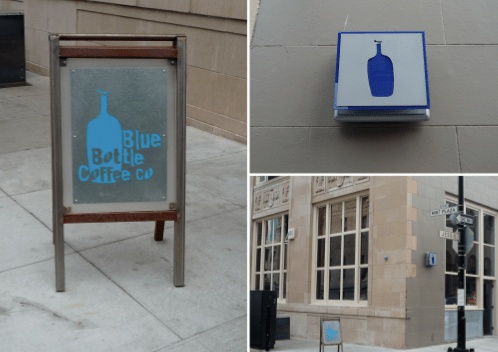
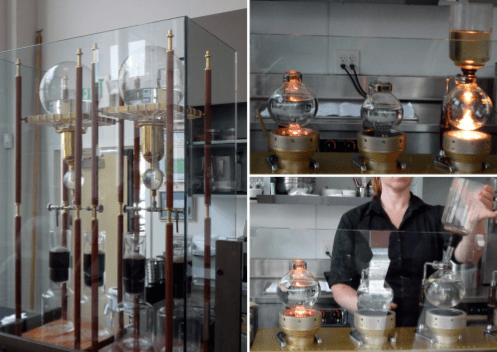
The cafe is easy to spot if you know exactly where it is. Otherwise, try to locate a cute “blue bottle” logo on the wall of the building behind the Mint Building. Once you enter the cafe, you will find yourself in a craftsman-decorated 17ft-ceiling room with modern, industrial redecoration. Looking around, you will see glassware of Blue Bottle’s Kyoto-style coffee maker and other coffee-related appliances on cafe’s long countertop. It really makes you feel like being in a chemistry lab rather than a cafe, which is very cool.

I usually visit Blue Bottle in the afternoon of weekdays, and always find the cafe packed with customers. Sometimes, the line even goes beyond the entrance. The staff are friendly, knowledgeable, and willing to answer your questions (including those related to the chemical reactions that might be happening in one of those glass beakers!). Since the cafe was very busy during the last time of my visit, I did not have a chance to talk to the barista although my latte was very good as expected. (Last month, my cappuccino was prepared by Sally, who had worked with Blue Bottle for 8 months. The drink was great, too.) Blue Bottle uses their 17ft Ceiling Blend for their espresso drinks. It mimics the Italian espresso blend but substituted robusta with high-quality organic arabica, resulting in a very smooth coffee with nice aroma. Blue Bottle also uses organic milk for their latte and cappuccino. If you are an ice-coffee guy, try Blue Bottle’s Kyoto or New Orleans ice coffee. (The Kyoto-style coffee takes over a day to prepare, slowly brewing drop by drop at room temperature.)

Picture 3

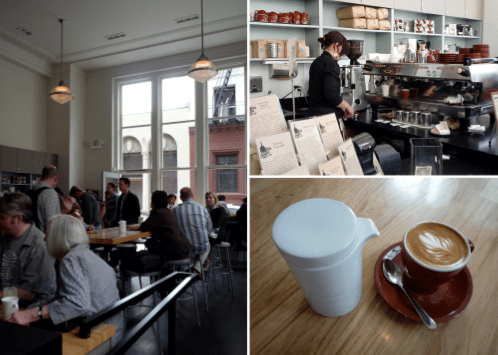
In terms of its ambience, the cafe is good for those who want a short break with a cup of coffee. The high ceiling makes the cafe airy, open, and relax. People also meet here for some quick informal business discussions. Although the cafe seems to be crowded and people have to wait for their drinks at times, I never have problem finding a seat in this cafe. There might be just around 20-30 seats in total, all with communal high bars rather than individual tables. Customers tend not to sit for a long time. One of the reason is that this cafe is not laptop-friendly (no electrical plugs and no wireless internet). However, I concur that this is a good policy after all, given the size of the cafe and the number of customers it serves. This is the place that you can come to enjoy your drink, relax, and leave your work behind– at least for a short moment.

–Kris Hound

Interview: Chuck Patton – Bird Rock Coffee Roasters

Name: Chuck Patton
Title: Owner, Bird Rock Coffee Roasters, La Jolla, CA
Birthplace: San Diego, CA
Hometown: Pacific Beach community. Went to elementary, junior high and high school within a few miles of present day Bird Rock Coffee Roasters retail location.
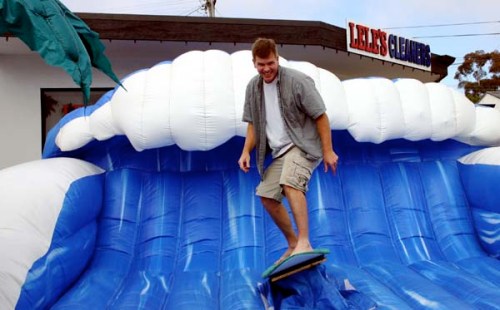
La Jolla Light festivities.

La Jolla Light festivities.

Background

Cafe Hound: Where does your passion for specialty coffee come from? When was that?
Chuck: I started drinking a lot of coffee in high school just for the buzz.  Several years ago, my wife got me a home roaster and I spent a lot of time experimenting with different beans from Sweet Maria’s until the hobby grew into a business.
CH: Tell me about your entry to coffee industry.
Chuck: I bought a one pound fluid air roaster for about US$3,500 and began a home delivery service. I also sold my coffee at the La Jolla farmers market.
CH: How many years of experience do you have in coffee industry?
Chuck: I started the business in 2002.
CH: Did you work for other coffee establishments before starting your coffee business?
Chuck: No. I was self taught.
CH: What was the first location of your business?
Chuck: I did not have a location at first.  I roasted out of the VFW on Turquoise because they had a health permit.  Then, I rented space in a restaurant that is now out of business on La Jolla Blvd.  I converted his wine bar into a coffee bar for morning business but it did not do well.  I chalked it up to a learning experience.  Then, I rented a coffee kiosk on Turquoise behind Albertson’s and operated out of there as the smallest licensed coffee wholesaler in California.  Then, I bought the business of a guy who was burnt out.  It included a list of wholesale accounts and a Probat L12 but, operated out of Miramar.  So, we did that for about a year until we moved here.
CH: Who were your initial clients?
Chuck: Most of our clients are from Bird Rock, La Jolla, and Pacific Beach.
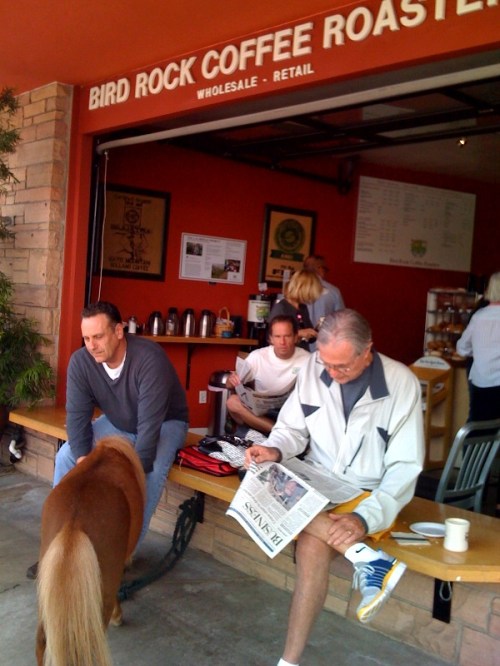

Pony spotting at BRC

Bean & Drink Talk

CH: Where do you buy your beans from?
Chuck: Different brokers. If we are buying directly from farmers, we still need to work with an importer and exporter.
CH: Do you roast your own beans?
Chuck: We roast our own.
CH: Do you sell wholesale or online?
Chuck: Yes, we do wholesale and also sell online.
CH: How often do you order beans? How often do you roast?
Chuck: We roast 5 days a week and order coffee at least twice a month.
CH: How do you name your blends?
Chuck: We only have two blends. We focus on single-origin coffee.
CH: What are your top 3 favorite roasts of the recent past?
Chuck: First, Ethiopia Amaro Gayo city roast. Second, Panama La Esmeralda city roast. And third, Costa Rica Micro-lot full city roast.
CH: What is your favorite drink?
Chuck: Coffee.
CH: What drink is the most sold at Bird Rock?
Chuck: Lattes.
CH: Are there any interesting stories behind your drink names?
Chuck: Trophy wife and sugar daddy are self-explanatory considering the area our café is located.
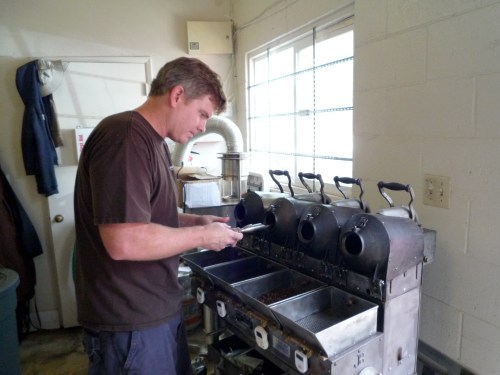
P1000231

Looking Ahead

CH: Do you have any plans for expansion?
Chuck: Secret.  No comment.
CH: So…what’s next?  Beyond the business, what else you would like to do through your work?Chuck: We are currently working on a water filtration project for some of the farmers we are working with in Huila. I will return to Colombia next month to install the second generation of prototypes in a few of the farmers’ homes. I believe we have a responsibility to the farmers we buy coffee from that goes beyond simply purchasing “Fair Trade” coffee so we will focus on projects like this in the future.
CH: What else do you want to tell our reader?
Chuck: We are continuing to seek out and purchase high quality coffee directly from farmers so we are increasing our travel time as we begin to develop relationships with farming groups.
CH: Thank you for sharing your interesting story with us.

Business Information

Bird Rock Coffee Roaster 5627 La Jolla Blvd., La Jolla, CA 92037 Tel. 858 551 1707 www.birdrockcoffeeroasters.com

Special Thanks

We would like to thank Chuck and the good folks at Bird Rock Coffee for roasting the beans used in the first release of Kris/Maher Blend. Maher also wants to thank all of the employees for keeping him caffeinated and happy over his last year of residence in Pacific Beach, especially Hector, Jocylynn, and Tony. Maher knows he’s forgetting the two dudes that used to make sure he got his morning espresso as he rushed to school – unfortunately, the key word was “rush”.

Photo credits: cafehound.com and http://www.lajollalight.com/life/258652-taste-of-bird-rock


Bird Rock Coffee Roasters

http://www.birdrockcoffeeroasters.com

5627 La Jolla Blvd.

La Jolla, CA 92037

858 551 1707

HRS: Mon-Fri 6am-6pm; Sat-Sun 6:30am-6pm

Background

Name: Chuck Patton
Title: Owner
Birthplace: San Diego, CA
Hometown: Pacific Beach community

· Went to elementary, junior high and high school within a few miles of present day Bird Rock Coffee Roasters retail location.

Cafehound.com: Where does your passion for specialty coffee come from? / When was that?

Chuck: Started drinking a lot of coffee in high school just for the buzz.  Several years ago, my wife got me a home roaster and I spent a lot of time experimenting with different beans from Sweet Maria’s until the hobby grew into a business.

Cafehound.com: Tell me about your entry to coffee industry.

Chuck: I bought a one pound fluid air roaster (~US$3,500) and began a home delivery service; selling my coffee at the La Jolla farmers market.

CH: How many years of experience do you have in coffee industry?

Chuck: Started the business in 2002.

CH: Did you work for other coffee establishments before starting your coffee business?

Chuck: No. Self taught.

CH: What was the first location of your business?

Chuck: Did not have a location at first.  I roasted out of the VFW on Turquoise because they had a health permit.  Then, I rented space in a restaurant that is now out of business on La Jolla Blvd.  I converted his wine bar into a coffee bar for morning business but it did not do well.  I chalked it up to a learning experience.  Then I rented a coffee kiosk on Turquoise behind Albertson’s and operated out of there as the smallest licensed coffee wholesaler in California.  Then, I bought the business of a guy who was burnt out.  It included a list of wholesale accounts and a Probat L12 but, operated out of Miramar.  So, we did that for about a year until we moved here.

CH: Who were your initial clients / client profile?

Chuck: Most of our clients are from Bird Rock, La Jolla, and PB.

Bean talk

CH: Where do you buy your beans from?

Chuck: Different brokers. If we are buying directly from farmers we still need to work with an importer and exporter.

CH: Do you roast your own or purchase from a wholesaler?

Chuck: We roast our own.

CH: Do you sell wholesale? Online?

Chuck: Yes/Yes

CH: How often do you order beans? How often do you roast?

Chuck: We roast 5 days a week and order coffee at least twice a month.

CH: How do you name your blends?

Chuck: We only have two blends.    We focus on single-origin coffee.

CH: What are your top 3 favorite roasts (country, degree of roast, specific origin/farm if possible) of the recent past?

Chuck:

Country

Most specific Origin

Roast (degree of roast)

Ethiopia

Amaro Gayo

City Roast

Panama

La Esmeralda

City Roast

Costa Rica

Micro-Lot

Full City Roast

Drink talk

Favorite Drink: Coffee

Most sold at Bird Rock: Lattes

CH: Are there any interesting stories behind your drink names?

Chuck: Trophy wife and sugar daddy are self-explanatory considering the area [our café is located in]…

Looking Ahead

CH: Any plans for expansion?

Chuck: Secret.  No comment.

CH: So…what’s next?  Beyond the business, what else you would like to do through your work? (Training initiatives, Farm visits, Educational programs, Environmental programs, etc…)

Chuck: We are currently working on a water filtration project for some of the farmers we are working with in Huila.  I will return to Colombia next month to install the second generation of prototypes in a few of the farmers’ homes.   I believe we have a responsibility to the farmers we buy coffee from that goes beyond simply purchasing “Fair Trade” coffee so we will focus on projects like this in the future.

CH: What else do you want to tell our reader?

Chuck: We are continuing to seek out and purchase high quality coffee directly from farmers so we are increasing our travel time as we begin to develop relationships with farming groups.

End of interview.

Special thanks to Chuck and the good folks at Bird Rock Coffee for roasting the beans used in the 1st release of Kris/Maher Blend. Maher also wants to thank some the employees for keeping him caffeinated and happy over his last year of residence in Pacific Beach: Hector, Jocylynn and Tony. Maher knows he’s forgetting the two dudes that used to make sure he got his morning espresso as he rushed to school – unfortunately, the key word was “rush”.

Photo credits: Cafehound.com and http://www.lajollalight.com/life/258652-taste-of-bird-rock

Cafe Hounding: Lion Coffee – San Diego

Lion Coffee – San Diego

101 Market Street (Corner of 1st and Market)
San Diego, CA 92101
619.299.5466
www.lionmainland.com

P1000286

Following up the news about Lion Coffee in downtown San Diego that I posted here two weeks ago, I finally visited this cafe today. It has been opened just for about a week. The business seems to be going well so far. As I mentioned in the earlier post, this is the only Lion Coffee cafe in the mainland USA.

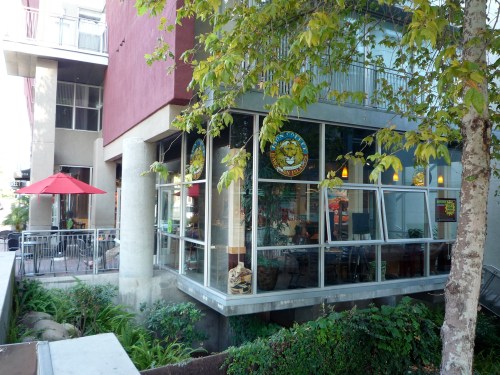
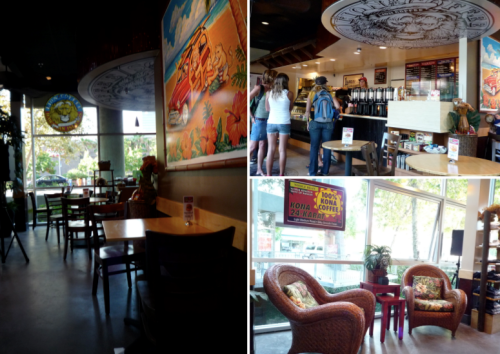
The location of this cafe is great. It is near Horton Plaza, Convention Center, and Seaport Village. The floor-to-ceiling windows with garden and trees outside make this store unique and differentiate itself from other coffee places in the Gaslamp Quarter of downtown San Diego. Larry Wilkens, the owner, keeps the layout of the cafe the same as Starbucks cafe that previously occupied this premise, but he redecorated the store with bamboo shelfs, rattan sofa, Hawaiian paintings, and vintage tropical ceiling fans– basically bringing bits of Hawaiian feeling to the mainland USA. (There are a lot of lion dolls and statues here and there all over the cafe, too.)

Picture 7

Seating was ample when I visited, which was in an afternoon of a weekday. Many of the customers seem to purchase coffee to-go. There is also an outdoor seating area if you prefer. I do not expect the cafe to be too crowded. This should be a nice place if you want to spend time relaxing over a cup of coffee, and don’t want to feel that you have to rush because other people are waiting for the table. There is more than enough natural light during the day if you want to read books or newspapers while sipping your coffee. Free wireless internet was detected when I was there, although I was not sure whether it was provided by Lion or some residents in the nearby apartments were generous enough to provide this public goods.

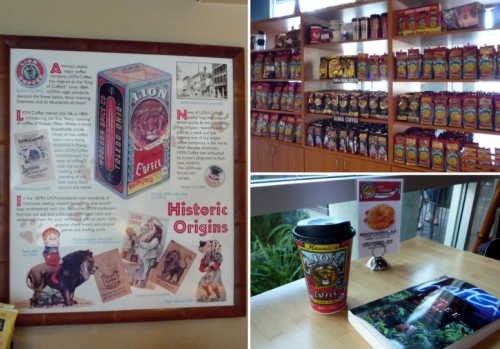
I ordered a latte. It was prepared by a super friendly barista “Lenny” who has worked with Larry and Lion for over a year, since when Lion was still at the previous location in Mission Valley. My latte was made from Lion’s Diamond Head Blend, which has 10% Hawaiian beans plus Arabica from other parts of the world. It was medium Italian roasted. My latte was quite good and served in colorful Lion cup. (I still have yet to try espresso drinks made from Lion’s 100% Kona beans.)

Picture 8

For non-espresso coffee, Lion provides a wide variety of non-flavored and flavored coffee drinks, including 100% Kona coffee. The cafe is also a retail store for Lion Coffee and Royal Kona Coffee beans, which were roasted in Hawaii and shipped here regularly. According to the reviews on yelp and my conversation with Lenny, Toasted Coconut flavor seems to be the best selling blend at this store. There are other Hawaiian goodies such as teas, chips, and macadamia chocolate available for purchase. They also serve light breakfast and fresh pastries, in case you look for something to enjoy with your coffee.

Overall, I had a good experience with the visit. Unlike the ultra-fancy restaurants that occupy the dining scene of Gaslamp Quarter, Lion Coffee is a friendly neighborhood cafe in the middle of downtown that you can just relax and get good coffee prepared by a surfer-dude barista and friendly staff– a cherry on the top of your enjoyment in the beautiful San Diego.

–Kris Hound

Cafe Hounding: Caffe del Doge – Palo Alto

Caffe del Doge

419 University Ave
Palo Alto, CA 94301
(650) 323-3600

www.caffedeldoge.com

P1000258

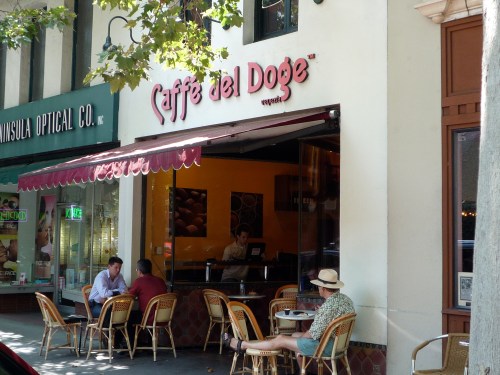
Caffe del Doge in Palo Alto is a franchise of an Italy-based company but owned by a group of local shareholders. It is a fine cafe located on University Ave near Stanford University and within a walking distance from the Palo Alto CalTrain station. I have frequented this cafe for several times and finally had a chance to write about it.

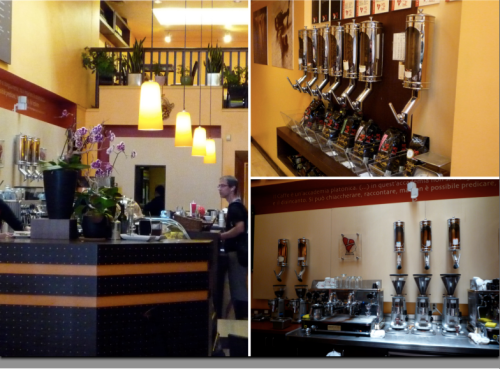
I visited Caffe del Doge earlier this week. It was in the late morning during the summer time so the cafe was not as crowded as it usually was during the school year. The place seems to be a meeting place for local business people as well as a study place for Stanford students. The cafe has a high ceiling with an upstair loft providing extra seating. The interior decoration is in bold yellow and presents various pictures of beautiful Italy in general and Venice in particular. There are a couple of outdoor tables and indoor high bar stools overlooking outside if you would like to enjoy people watching. But free wireless internet and electrical plugs are also available if you prefer working on your laptop instead.

Picture 4

Ironically, my most favorite drink at Doge is not coffee. Most of the time I ordered their thick and dense “drinking hot chocolate” (which got quite a lot of hostile reviews in yelp!). It turns out that there are not so many places that you can have this kind of hot chocolate so I tried to take the advantage of this offer when I visited Doge. The pastry is also delicious.  But your total bill can add up quickly as the price of food and drink sold in this cafe is on a relatively high range. But remember that the cafe is located in Palo Alto and the ingredients they use are of high quality so we should not complain here. The cafe also sells selections of roasted coffee beans (both blends and single origins from the America and East Africa) and chocolate bars.

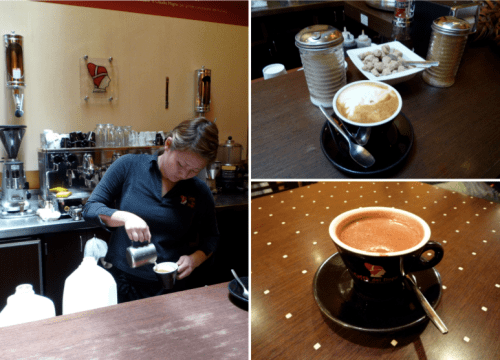
Since I was on cafe hounding mission, I decided to order a cappuccino instead of the usual favorite hot chocolate. As always, the staff was very attentive and carefully prepared for my drink. They used their own classic blend “Doge Nero” for my cappuccino. According to their description of the blend, Nero was introduced in 1996 and became the best selling blend in Doge’s Venice cafe. For me, the blend was not too strong (both in terms of body and aroma) but seemed to work quite well with the foam in my cappuccino due to its dark chocolate aftertaste. Given the tradition and trend in specialty coffee that promote 100% Arabica blends, I was surprised to learn that Nero was in fact a blend of Central and South American Arabica and also ROBUSTA from Karnataka region of India!

(Left) Careful preparation of my cappuccino; (Top Right) My cappuccino with various choices of sweeteners; (Bottom Right) My drinking hot chocolate

(Left) Careful preparation of my cappuccino; (Top Right) My cappuccino with various choices of sweeteners; (Bottom Right) My drinking hot chocolate

Overall, what is lacked at Palo Alto Caffe del Doge is the good smell of roasted coffee beans that you usually expect to get when you visit a cafe that roasts their own beans on premise. This is because Palo Alto Doge does not roast their beans at the cafe. In fact, the beans were roasted and shipped to the cafe directly from the roasting facility in Italy. If you are a cafe geek looking for coffee aroma upon stepping inside the store or someone who is very obsessed with very freshly roasted beans, then you will have to knock some points out of Palo Alto Caffe del Doge. But overall, the cafe is a very fine place to have coffee in Palo Alto. Will I revisit there again? YES, of course.

–Kris Hound