Cafe Hounding: Chinatown Coffee Co. – DC

Chinatown Coffee Company
475 H Street, NW
(between N 4St & 5
th St)
Washington, DC 20001

http://chinatowncoffee.com/blog/

After roughly two weeks of trying, I finally made it to Chinatown Coffee Company (CCC) at the outskirts of Chinatown in Northwest DC.  I went on a Sunday afternoon with a friend of mine who was a bit curious about my passion for specialty coffee.  It wasn’t very busy when I arrived but nearly every seat in the place was taken by people using laptops (free wifi) or staying out of the blistering DC heat/humidity.  It was nice and cool inside and had a nice gritty feel to the ambiance that gave the impression that the focus was over at the coffee bar.

The moment of ordering truth

The moment of ordering truth

I took the engineer designed ‘hint’ and wandered up to the bar to order two double shot espressos that were to be made with the Intelligentsia Black Cat espresso blend.  The menu appeared simple enough, but with plenty of variety for above average prices for people unacquainted with specialty coffee (i.e. Intelligentsia prices).  The espresso was produced on a beautiful Victoria Arduino Adonis WBC edition machine with a sleek white gloss design.
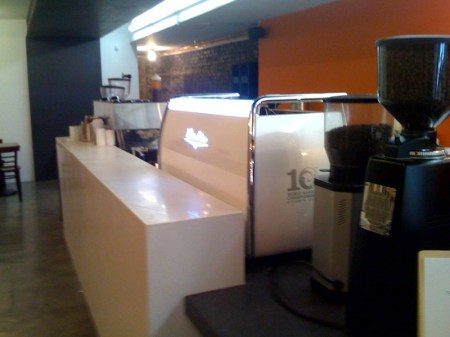
Espresso

Victoria Arduino Adonis WBC edition (sexy!)

I’m not sure if the humidity was a major factor, but I suspect it was, but the espresso was rather flat and left much to be desired.  I wasn’t willing to give up because the baristas were very nice and the quality of all of the inputs was undoubtedly of the highest quality.  I encountered similar problems with humidity when training baristas at a warehouse in Nicaragua in 2008.  The incredibly muggy rainy season led to a plethora of quality control problems with the resource constraints we were facing.    Nevertheless, CCC  is surely not getting a bad review for espresso – it just wasn’t the best day.

I followed up the espresso order with a cortado since my friend claims half-Cuban heritage yet she was not familiar with the famous Versailles Restaurant(s) in Miami, Florida…meaning she had never sampled their delicious cortadito drinks.  Luckily for me, with a little sugar this little drink saved the visit for my friend who admittedly does not like espresso much regardless of the quality.  The establishment is pretty proud of the fact that is chooses to break the DC paradigm of mostly sourcing strictly Counter Culture coffee (roasted down in North Carolina and shipped up the eastern seaboard) in favor of Intelligentsia.
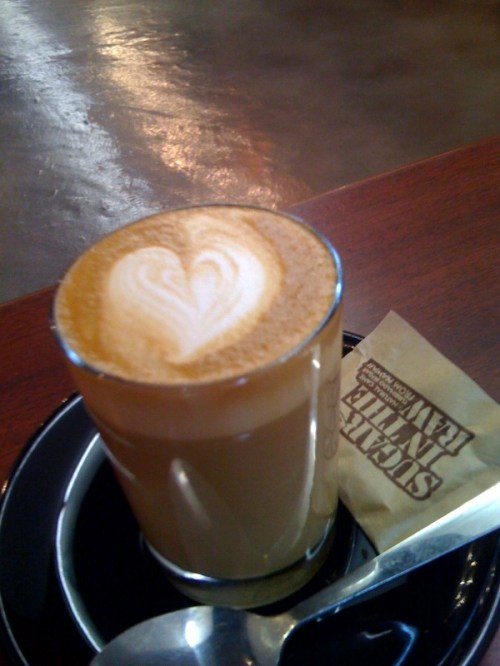
A CCC take on the Cortado

A CCC take on the Cortado

Another major plus was that the baristas were not only proud of the around town competition helping put DC on the specialty coffee map but enlightened me to shops that I have never even heard of.  I also was fast to learn that the very helpful and pleasant David Flynn of Peregrine Espresso was in the building diligently working on his laptop.  Talk about cross-town support.  Furthermore, my barista informed me that he was indeed David’s roommate – I somehow doubt cut-throat competition between Peregrine and CCC.  I guess coffee geeks like me like to surround themselves with other coffee geeks.

Shortly after sampling the aromas of all of the whole bean coffee that they were carrying for retail sale I decided to go with the Guatemala.  I’m sort of ashamed since the competition included El Salvador, Honduras and Nicaragua.  I felt some allegiance to the Estelí region of Nicaragua after having spent considerable time meeting producers and exporters from throughout the country in 2008 but, at the end of the day, went with what my nose told me.  I have nothing but positive experiences with Guatemalan coffee in the past and after brewing this up today, it is no different.

Specifically the coffee I purchased was 12 oz and cost me US$12 plus tax.  It was the Itzamna, Guatemala: La Soledad.

Intelli’s description is as follows:

“Surrounded by peaches and inherently sweet with an animated acidity. Finca La Soledad finishes with vanilla, yet sails with its zesty nature.”

I would agree with the sweet acidity and moderately agree with the vanilla finish.  I would add that it has a modest fruity taste (apparently that’s the peach) but it’s barely there.  Overall it’s a mild coffee with less ‘animation’ and ‘zest’ than it claims. It’s very pleasant though, and a great coffee for pour over brew.  Blending it with something that has a bit more flowery flare, such as an Ethiopia Sidamo or a Rwanda Burundi, would really balance it off well. This is similar to what Kris and I decided to do with the first edition of  Kris/Maher Blend using 80% Guatemala and 20% Ethiopia. Again, that is just a matter of taste preference.

I’ll be returning in the near future to talk with the owners and get some more coffee.  Thanks for stopping by and leave any thoughts you may have.

– Maher Hound
Beyond Coffee: ZERI Foundation

“The Pavillion” in Manizales, Colombia

The most important work of the ZERI foundation and its “Eje Cafetero” project in Colombia was the construction of the ZERI pavilion, thanks to the magnificent design of Simón Vélez and the technical support of Marcelo Villegas.

  • The first objective of this initiative was to prove that Guadua (American bamboo) is a material fit for use in construction, competitive with the most rigid standards of civil engineering.
  • The second was to discard the stereotype of poverty associated with the use of this material, in preference of branding Guadua as a symbol of the Coffee Growing Region, of innovation, sustainability and of practicality.

To strengthen the objectives of the ZERI foundation, it decided to invite Colombian architect  Simón Vélez to design the pavilion for the Hanover Expo 2000 in Germany.  The foundation was invited by the German authorities to present its vision of “humanity, nature and technology,” a modern pavilion among the likes of the pavilion of Japan.

Coffee farmers in the “Eje Cafetero” have long used Guadua to build bench terraces to prevent landslides and routine erosion.  It has also been used for similar purposes in shantytowns in that region of Colombia (hence the association with poverty).  Many have come to realize that it is quite aesthetically pleasing and also incredibly architectually reliable leading to increasing use of Guadua in construction of houses, terraces and more.

The collaboration of the United Nations Development Program, ZERI, Manizales Chamber of Commerce and German partners, the launching of Guadua onto the world stage never would have occurred.  This is also important because it has given agricultural workers in similar climates an additional resource that they can grow, use and sell.

The ZERI foundation was awarded the Sustainability Award from the SCAA in 2009 for its continued efforts to promote sustainability, environmental awareness and economic viability on a global scale. Their specific project was actually related to growing mushrooms from the  cumulative ‘waste’ of the coffee harvest – hence reducing the carbon footprint and adding value for coffee farmers much like the pilot program in Zimbabwe.

Buzz: Nicholas Cho on Starbucks New Strategy

July 26, 2009: Washington Post

Your Local Coffee Shop,
Courtesy of Starbucks?

Coffee used to be about consumption. It wasn’t supposed to taste very good and was often freeze-dried. I remember my introduction to the beverage that would become my livelihood: My parents laughed as I gagged on the bitter swill. This was the first wave of coffee.

Recently, coffee became more about enjoyment. Make me a cappuccino! I want it blended up with some ice! I love it with an extra pump of vanilla! No longer do we put up with bad-tasting coffee. In fact, coffee doesn’t even have to taste like coffee at all. This is America! I’m entitled to something yummy! That was the second wave.

Now we’re seeing the development of a third wave — a shift that my colleagues in the specialty-coffee industry have helped nurture. Much like wine appreciation or music appreciation, third-wave coffee isn’t just about pleasure. Coffee enthusiasts are taking the time to understand what goes into a truly great cup, researching everything from where beans are grown to proper brewing. This is the wave that I rode at Murky Coffee, which I ran for seven years, and that I’ll follow at the new place I’m helping open this week in Washington, Chinatown Coffee Company.

But now the waters are getting a little choppy.

The big green mermaid wants some of the third-wave action. On Friday, Starbucks opened a store in Seattle that’s not what you’re used to seeing on, say, every other block of most U.S. cities. It’s called “15th Ave. Coffee & Tea, Inspired by Starbucks,” and it’s apparently part of the company’s effort to refresh the brand. The plan is to offer the independent coffee-bar experience: better coffee, more knowledgeable baristas and a more refined cafe environment.

In other words, they’re encroaching on my turf.

In what has become legend in Seattle, about 10 dark-suited executive types clutching logo-emblazoned notebooks went on a series of research trips to some successful independent coffee bars in the city, including Victrola Coffee Roasters. The barista trainer there, a friend of mine, told me that one of the baristas grilled the visitors until they confessed their mission: to take notes on the cafe’s vibe. Another barista supposedly got sick of seeing his every move discussed and notated. He leapt toward the corporate spies, jumping up and down while exclaiming, “Dance, monkey! Dance!”

I wonder if they wrote that down.

I actually wish them the best. Maybe Starbucks will return to being about coffee instead of about milkshakes, breakfast sandwiches and Sheryl Crow CDs.

This might seem strange coming from me; I am an independent coffee retailer, after all. Last year I received a bit of attention when my Capitol Hill shop was closed because of tax problems, and later when a customer at my Arlington cafe flew off the handle because he didn’t like our policy of not serving espresso over ice. Bloggers began debating whether the customer truly is always right, the sort of policy that’s more common at corporate chains.

So some people might assume that I’d poo-poo Starbucks’s efforts. Everyone expects the proverbial little guy to sling stones at the big guy, as if doing anything else would be un-American.

But if Starbucks brings one of these new concepts to Washington, I’ll be among the first in line. To me, Starbucks is only a problem if the quality of their coffee gets worse, and this new spinoff might help it get better. (If they want to compete with the likes of Victrola and other great third-wave coffee bars, it’s going to have to get a lot better.)

I hope the coffee wars help nudge the caliber of all coffee upward. Just because you’re not a corporate behemoth doesn’t mean you serve delicious brew. The dirty little secret of most independent coffee shops is that they don’t know how or don’t care to serve high-quality coffee. They believe that furnishing their shops with comfy chairs and knowing the names of their customers’ dogs is all that matters. What’s arguably worse is that some of the most highly respected chefs in the country are serving some truly awful coffee. Apparently great coffee doesn’t help get you a show on the Food Network.

My customers tell me that, aside from the coffee, what makes a great coffee shop experience is the authenticity, which is one of those you-know-it-when-you-see-it things. How can you manufacture authenticity? That’s the problem that has plagued Starbucks for years, and I don’t know if this latest project will help them figure it out.

Still, I really do wish them the best. After all their research, we’ll see if what should actually be called “Inspired by Dancing Monkeys” is another success for the mermaid.

nick@murkycoffee.com

Nicholas Cho is the former owner of Murky Coffee and the chairman of the United States Barista Championship.

Finca Review: Alto del Naranjo – Manizales, Colombia

Finca1

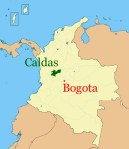
And so was — the Alto de Naranjo coffee farm located just outside of Manizales, Colombia in the Caldas Department of the coffee growing region also known in Spanish as the “Eje Cafetero”.  I was wrapping up my 3-month stay in Nicaragua and arranged for a 10-day stop in Colombia before heading back to study in San Diego.

Caldas_CO_map

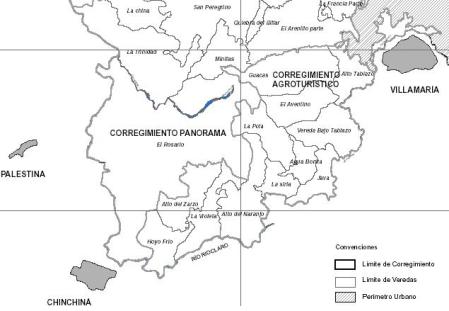
The trip to Colombia involved many mini-trips including taking a flight on Avianca from Bogota to Manizales where a friend picked me up and – the next day – took me to a farm southwest of Manizales in the municipal division of Alto del Naranjo bordering the Rio Rioclaro.

Specific Location of Alto del Naranjo

Specific Location of Alto del Naranjo

The trip to Horacio Montoya’s wonderful farm was an impulsive decision made the morning after a night out enjoying vallenato and Caldas’ very own Cristal licor.

The REAL Juan Valdez

The REAL Juan Valdez

The drive up to this series of farms that sit high upon the Colombian mountainside is always an adventure made more pleasant by stopping for some fresh cooked chicharrones, patacones (fried green plantains that are squashed and fried – best served with a bit of salt and perhaps salsa on them), beans, rice, and flank steak. Add a maracuya en agua (passion fruit diluted in water) and save your thirst for some freshly roasted/ground/brewed coffee on the actual farm.

Homemade Roasting Device for Stove

Homemade Roasting Device for Stove

Upon my arrival to the farm I realized that I wasn’t the only foreigner ‘aprovechando’ (taking advantage of) the owner Don Horacio Montoya’s charming hospitality and effervescent personality.  There was a delegation of about 15 Japanese tourists there from the Japanese Chamber of Commerce who were exploring the coffee plants, riding his horses, and enjoying the fruit of his labor – fresh coffee.  Rather than interfere with their visit, my colleague and I interviewed him shortly and then explored the fields ourselves.
It quickly became clear to me that Horacio Montoya is no stranger to … strangers.  He has foreigners, especially from Japan, visiting his farm all the time.  His son Diego is about 17 and a Facebook addict like the rest of the  world.  Montoya has been able to take profits and reinvest them in providing his wife with more sophisticated roasting machinery, improving the prospects of hosting families on his property (eco-tourism), installing high-speed internet for watching the Grade C coffee market prices and for self-marketing his product on top of what the National Federation of Coffee Growers of Colombia does.
Although the quality of the coffee that is roasted and packaged on the farm is nothing to write home about, it is a novelty rarely seen in the coffee industry.  The farmer realizes that the maximum value added chain of the process flow is roasting and retail and so he attempts to capture that profit for himself by ‘vertically integrating’ in a way.  Considering he sells each package for 7.000 Colombian pesos, at the August 1, 2009 exchange rate this would equal roughly $3.42/pound.
He surely sells a better final product by selling it straight in green bean form in the traditional 70kg sacks that Colombian lights are so well known for. Visiting this region of Colombia is simply a necessity.  It’s safe, it’s beautiful, it’s continuously developing at a rate much faster than more frequented Central American locations and the Colombian hospitality will forever leave an impression.  Not to mention, this smooth and acidic coffee shares certain flavor properties with its neighbors but, there are some undiscovered gems in this region of Colombia.  So long as the weather keeps up, I expect some of the single-origins of Colombia to possibly migrate to this region as they have in Popayan, Cauca & parts of Nariño, Huila, etc…
Stay tuned because Santa Marta in the north has some interesting beans coming out of it that will require another on site visit and their own write up in the coming months.  Until then, I’ll leave you with a few pictures and details about the enchanting Alto del Naranjo farm in Manizales, Colombia.
Altitude: ~1,700 meters
Varietals: Caturra, Typica
Land: 4.8 hectares
# of plants: 25,000
Annual Production: Unknown
Harvest 1: Sept-November
Harvest 2 (mitaca): Late Jan-March
Proportion domestically sold: n/a
Proportion exported: n/a
Main avenue of getting coffee to market: Federcafe – National Federation of Coffee Growers of Colombia
70kg Sack for Sale to Exporters in Colombia

70kg Sack for Sale to Exporters in Colombia

Main aspiration of owner/farmer: Fetch a higher premium for his family’s hard work.  Send his children to the university and see his son Diego become fluent in English (we’re working on this part already).  A big part of this goal is for him to attract eco-tourism to this zone so that all of the farmers that form part of his cooperative can begin to economically benefit from increased spending and attention to this largely untapped area of natural beauty in Colombia.
Don Horacio Montoya Ponders the Future of his Industry

Don Horacio Montoya Ponders the Future of his Industry

Contact @ maher@cafehound.com
– Maher Hound
Horacio Montoya is somewhat of a celebrity
Articles in Spanish: El Espectador, El Pais, La Republica
Brazilian article: Nossa Cara
Japanese videos: 1, 2, 3, 4, 5, 6, 7,

Ecotourism: Quindio, Colombia

I apologize in advance for those who cannot read Spanish but I was so excited about this article in Cambio that I had to share it with our loyal readers.

As some of you know, much of my passion for specialty coffee comes from my experiences at farms in Colombia.  The ecotourism business model has many shapes and sizes and its application to coffee first became a big deal in Costa Rica with the Cafe Britt tours. Similar models have evolved in Central America (such as Finca Esperanza Verde in Nicaragua) and elsewhere but in Colombia it has been difficult to really get one off the ground due to concerns (tourist more than local) about security.

It brings me great joy to share the development of a similar effort in Colombia.

Things are still getting off the ground at El Agrado but stay tuned for more information as I investigate.  Hopefully we’ll all be cupping coffee in the beautiful mountainside of Colombia before we know it.

–  Maher Hound

Source: Cambio

Desde hace poco menos de una década, los productores de vino chilenos y argentinos entendieron que una de las mejores maneras de consentir a sus clientes era abriendo sus viñedos a la visita de esas personas que por afición o trabajo quisieran vivir la experiencia vitivinícola de manera profunda. El resultado fue impresionante y hoy, muy orgullosos, los del Cono Sur pueden hablar de un turismo especializado en la vid.

De la misma manera, los amantes del café en el mundo entero estaban esperando que en Colombia -la tierra donde se produce el mejor grano del mundo-, algo similar sucediera. Y está sucediendo. Se trata del proyecto El Agrado, en el corregimiento Pueblo Tapao -en Montenegro, Quindío-, que nació como un gigante Centro de Análisis y Catación de Café de la Federación Nacional de Cafeteros de Colombia y que, poco a poco, se ha convertido en el lugar donde los expertos quieren ir a aprender todo sobre el café.

A 1.330 metros de altura, en la exuberante finca de 43 hectáreas, nació bajo la idea de “crear una cultura de taza en los caficultores del Quindío, para que ellos mismos hicieran ajustes en los procesos de recolección, beneficio, secado, almacenamiento y hasta preparado de café, para así asegurar la competitividad del producto de la región a largo plazo -según explica Jaime Duque, jefe del programa de Cafés Especiales y Aseguramiento de la Calidad de la Federación-. Sin embargo, el concepto se ha ampliado, ya que esta finca es el lugar donde los expertos en el tema pueden venir a ‘zambullirse’ en una experiencia completa de café”.

Con toda la tecnología de punta -inversión en maquinaria italiana y alemana para todos los procesos-, El Agrado seleccionó el mejor personal del país para capacitar a sus visitantes, incluidos los ‘patieros’ (que son quienes operan los equipos de despulpado y en algunos casos los de secado) y los recolectores de la zona, con el único fin de llegar al último resultado que es una taza de café de altísima calidad.

En busca de ver todo el proceso del café, desde la recolección hasta el cómo preparar un buen capuchino -al final del recorrido hay baristas que enseñan todas la técnicas de preparación-, a la finca llegan tres perfiles de visitantes: los clientes internacionales del café de Colombia, los propios caficultores colombianos que buscan educarse y aficionados de todas partes que quieren vivir la experiencia.

“La idea es que muy pronto se formalice un tour en el que podamos recibir a muchos visitantes del mundo que quieran vivir esta experiencia -explica Lucas Restrepo, gerente comercial de la Federación-. Por ahora solo recibimos y capacitamos a pocos, pero tenemos claro que hay que ir hacia un turismo de café, ya que seguimos empeñados en mostrar y demostrar que tenemos el mejor ingrediente del mundo”.